By Jill Kimmick
August 13, 2026
Reinforcing concrete slabs and structural elements requires careful evaluation of available reinforcement materials. Welded wire reinforcement served for generations as the default solution for crack control and structural support across the building industry. Contemporary engineering advances now present alternatives that alter material selection for modern job sites. Selecting an optimal reinforcement strategy impacts slab performance, project timelines, and overall maintenance requirements over the lifecycle of the structure.
Modern job sites demand solutions that enhance durability while reducing labor bottlenecks and construction schedule delays. In local concrete construction, contractors and engineers must weigh the proven familiarity of conventional steel grids against the isotropic reinforcement capabilities of dispersed filaments. Understanding the mechanical differences between these methodologies allows project specifiers to make technical decisions that align with structural demands and complex environmental site conditions.
Examining Structural Integrity and Load Distribution
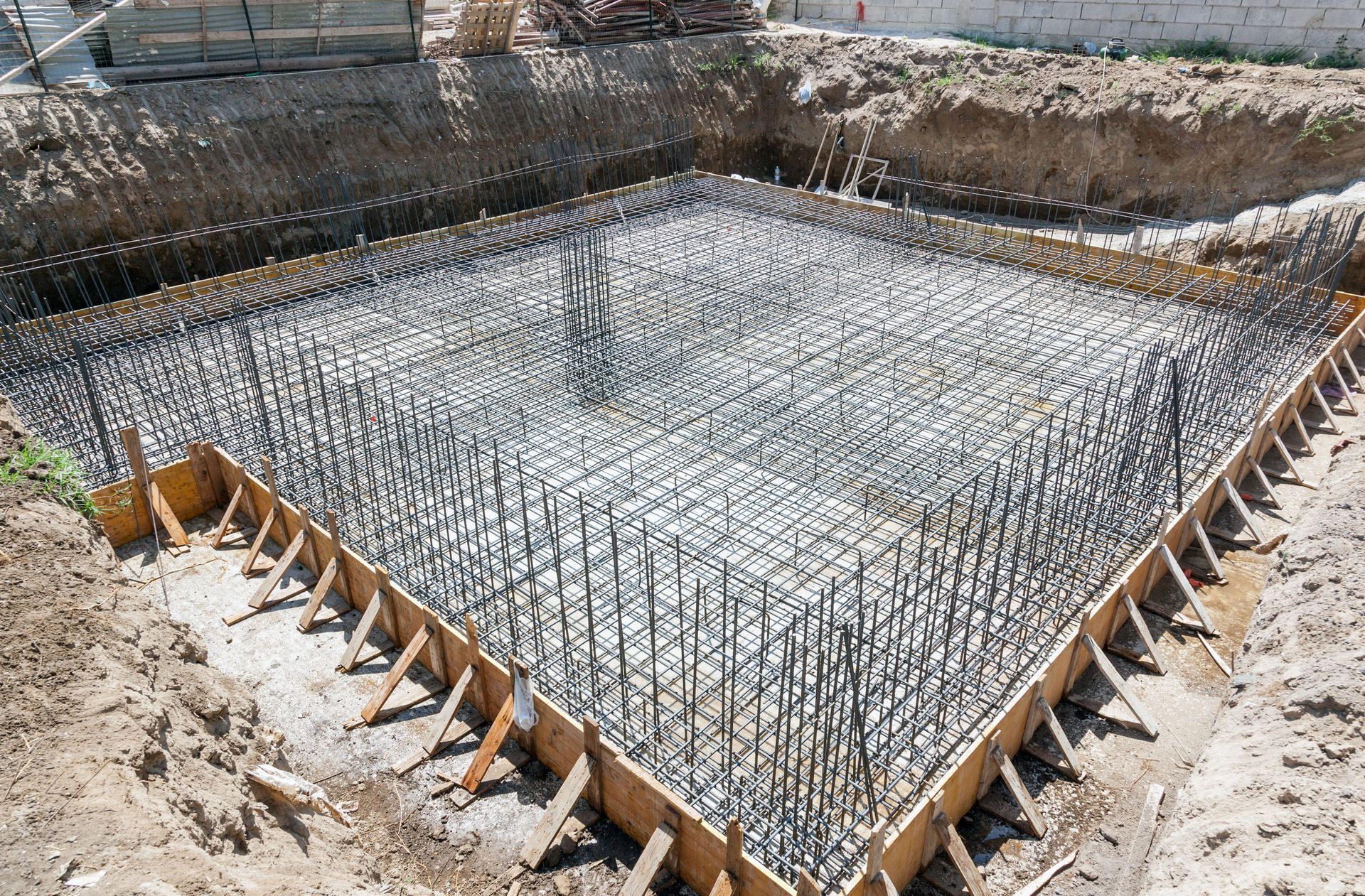
Conventional welded grids provide tensile strength along defined planes where the intersecting wires lie within the slab. This planar configuration relies on proper elevation support to remain in the upper portion of the pour. When heavy equipment or foot traffic pushes the grid toward the sub-base during placement, the embedded reinforcement loses its ability to resist surface tensile stresses and flexural deformation under traffic loads.
Dispersed filaments operate throughout the entire volume of the slab, creating a multidirectional matrix of internal reinforcement. Instead of relying on a horizontal plane, these metallic elements intercept micro-cracks at their genesis across all structural axes. This volumetric distribution enhances the shear capacity, load-bearing performance, and impact resistance of the cured slab across demanding local concrete construction applications and heavy industrial facilities.
High-stress industrial environments require specialized concrete formulations capable of withstanding extreme mechanical forces without brittle structural failure. According to Gitnux, ultra-high-performance concrete (UHPC) usually has a compressive strength of 150–250 MPa. Integrating metallic filaments into advanced mixtures provides the ductility needed to balance such immense compressive strength with equivalent tensile resilience under heavy dynamic loading conditions across demanding industrial pavement installations and logistics hubs.
Comparing load distribution between reinforcement types reveals clear behavioral differences under concentrated point loads. Traditional grids transfer stresses along orthogonal wires, which can result in localized overstressing at welded intersections. Dispersed filaments redistribute stresses across countless individual fibers within the concrete matrix, reducing peak stress concentrations, mitigating structural fatigue, and extending the operational lifespan of concrete floors, storage yards, and exterior pavements.
Assessing Installation Efficiency and Labor Demands
Installing conventional wire sheets requires extensive manual labor before any material flows from the ready-mix chute. Construction crews must transport heavy sheets across the subgrade, overlap the edges according to structural engineering specifications, and secure the panels with wire ties. This preliminary preparation consumes valuable schedule time, delays subsequent construction phases, and increases physical strain on the on-site construction workforce during installation.
Proper placement of mesh mandates the use of chairs or support blocks to elevate the grid off the subgrade. In practice, construction personnel step on the suspended grid while maneuvering hoses and screeds, bending the metal and forcing it out of position. Such improper elevation compromises the reinforcement, leaving the slab vulnerable to mid-slab bending moments and premature structural cracking under operational loading.
Dispersed filaments eliminate the need for preliminary mat placement and elevation supports. Material suppliers introduce the reinforcing elements into the concrete mixer at the batch plant or on the job site. When blended into the fresh mixture, the reinforcement arrives ready for immediate discharge, streamlining the placement workflow and reducing preparation delays for local concrete construction projects across diverse commercial and residential building sectors.
Eliminating the placement and tying phase removes major logistical hurdles from the project critical path. Placing crews focus on pouring, consolidating, and finishing the slab rather than repairing displaced mesh. This reduction in preliminary labor mitigates tripping hazards on the job site, optimizes construction labor allocation, and accelerates project completion schedules for commercial, industrial, and residential developments without sacrificing structural integrity.
Comparing Long-Term Durability and Crack Mitigation
Concrete develops internal shrinkage stresses during curing as moisture leaves the cement mixture. Without adequate reinforcement, these volumetric changes generate visible surface fissures that expand across the slab over time. In local concrete construction, uncontrolled cracking allows water and chemical infiltration, leading to premature deterioration of the cement paste, internal reinforcement corrosion, and severe sub-base instability beneath the finished concrete pavement.
Traditional wire grids do not prevent the initiation of micro-cracks during the early stages of hydration. The wide grid spacing leaves substantial sections of the concrete matrix without localized tensile support. Mesh reinforcement engages after a crack opens wide enough to transfer stress to the embedded steel wire, limiting its preventive capabilities against initial shrinkage fissures and microscopic surface defects across the slab.
Distributed steel filaments provide active crack suppression from the moment the concrete begins to set. Because the individual elements sit in close proximity to each other, they intercept micro-cracks before those flaws merge into larger structural defects. This continuous bridging mechanism holds the cement matrix together, preserving the structural continuity, load capacity, and surface aesthetics of the installation over extended operational periods.
Corrosion resistance represents another critical differentiation factor for exterior slabs and chemical processing facilities. Moisture penetrating through surface cracks can reach conventional wire mesh, causing rust oxidation that expands and spawns spalling around the wire. Dispersed filaments remain discontinuous throughout the matrix, preventing galvanic corrosion currents from traveling across the slab and compromising long-term structural longevity under harsh environmental conditions and chemical exposure.
Analyzing Project Suitability and Cost Effectiveness
Selecting between traditional mesh and dispersed filaments depends on the specific loading criteria and functional requirements of the project. Structural foundations with heavy cantilevered loads may require specific steel configurations according to regional building codes. However, slabs-on-grade, industrial warehouse floors, distribution facilities, roadways, and parking overlays benefit from the multidirectional support of volumetric fiber reinforcement across diverse commercial and structural applications.
Evaluating total material and labor expenditures reveals significant economic advantages for fiber-reinforced mixes. While the unit cost per cubic yard of fiber concrete may exceed plain ready-mix, eliminating mesh purchasing, site storage, and placement labor offsets this price differential. For many local concrete construction contractors, this integrated solution reduces total installed costs while accelerating overall project completion schedules and enhancing workforce productivity.
Maintenance and repair expenses over the lifespan of the structure influence the economic comparison. Slabs reinforced with conventional grids suffer from joint deterioration and edge breaking under heavy industrial forklift traffic. Fiber-reinforced surfaces resist impact damage and edge spalling, minimizing disruption to facility operations and lowering lifecycle repair budgets for commercial, agricultural, and industrial property owners across extended maintenance intervals.
Environmental and safety considerations favor the adoption of integrated reinforcement materials. Reducing job-site steel handling cuts down on hand injuries, lacerations, and physical fatigue among concrete placement crews. Eliminating the trucking and staging of wire rolls reduces site congestion, creating a safer, more organized working environment for all construction trades operating across the job site during structural concrete placement.
Selecting the appropriate reinforcement method remains a foundational decision for any successful concrete installation. While welded wire mesh has a long history in local concrete construction, metallic fiber reinforcement provides superior crack mitigation, isotropic shear resistance, and simplified placement logistics. Evaluating structural demands against installation efficiency ensures that the finished slab delivers enduring structural performance across its intended operational service life. At D&C Supply Company, we provide the reinforcement materials and technical guidance you need to elevate your next local concrete construction project. Contact us today to discuss your specifications and ensure your next slab stands the test of time.